
Engineering the UK's industrial future: designing manufacturing facilities built for tomorrow
Article published on 27 August 2026
The UK's manufacturing and industrial sectors are seeing renewed investment, driven by the Government’s long-term Industrial Strategy and external market pressures.
Advanced manufacturing, defence, energy, construction materials and logistics businesses are improving productivity, strengthening supply chains and reducing their environmental impact.
But rising costs, regulatory pressures, global uncertainty and skills shortages mean investment decisions must deliver long-term value.
In this turbulent geopolitical and economic climate, becoming more resilient and improving productivity are clear priorities for manufacturers.
Businesses are investing in automation, digital technologies and smarter processes, while supply chain disruption has accelerated interest in reshoring.
At the same time, regulations such as the Carbon Border Adjustment Mechanism (CBAM) are increasing pressure to reduce emissions across supply chains.
The industrial facilities being designed today must therefore do more than provide production space. They need to support efficiency, accommodate new technologies and adapt as business needs evolve.
That is where engineering plays a critical role.
Engineering beyond the building
Whether a business is expanding an existing production line, upgrading outdated infrastructure and processes or delivering a completely new facility, the right engineering approach can make the difference between a building that simply houses operations and one that actively improves them.
Every industrial site has different production processes, servicing requirements, equipment loads and operational constraints and needs.
Engineering must begin with understanding how the business operates, ensuring the manufacturing process drives the design, rather than the other way around.
The ultimate aim is to design industrial facilities that can:
support future expansion and changing production requirements
improve efficiency while reducing energy consumption and whole-life costs
minimise disruption during delivery
remain adaptable as technology evolves
Increasingly, this means improving existing facilities through refurbishment, strengthening and extension rather than relocating entirely.
Retrofitting industrial assets can improve structural performance, energy efficiency and compliance while allowing production to continue – making it a valuable alternative to new-build development.

Reducing business risk
Successful industrial projects rely on collaboration across multiple engineering disciplines.
Early-stage appraisals, ground investigations and utility assessments can help identify risks, unlock opportunities and provide greater certainty before contractors are appointed.
Enabling works such as demolition, service diversions or site preparation can also be delivered in advance, reducing contractor risk and helping projects stay on time.
The role of the engineer also frequently extends beyond design. We support clients through planning, procurement, contractor selection and technical due diligence, helping project teams make informed decisions throughout delivery.
Solving industrial challenges
Industrial projects rarely follow a standard approach. Facilities need to remain operational during construction, while specialist equipment, complex utilities and tight sites demand careful coordination.
Our experience working within live manufacturing environments enables us to minimise disruption while delivering practical engineering solutions that support long-term business objectives.
Whether improving energy performance, planning phased expansion, strengthening ageing assets or delivering complex new infrastructure, our focus remains the same: reducing risk while helping manufacturers to continue operating efficiently.
Engineering in action
Across the UK, Clancy supports businesses operating in advanced manufacturing, defence, construction materials, energy, logistics and food and drink production through civil and structural engineering services tailored to complex industrial environments.
Recent examples of our work include:
Perspex International: design engineering a £40 million expansion consolidating three manufacturing plants into a single, more efficient facility, expected to reduce carbon emissions by around 6,000 tonnes annually.
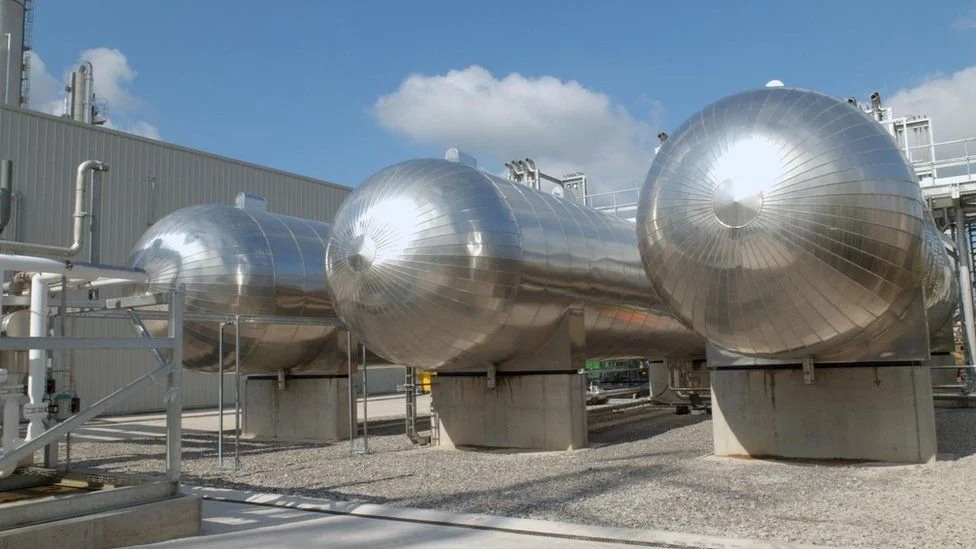
Tata Chemicals Europe: civil and structural engineering for the UK’s largest carbon capture and utilisation facility in Norwich, delivered within a live industrial environment.
Essity: structural surveys, building appraisals and engineering design to modernise manufacturing infrastructure at its Trafford Park mill while maintaining continuous production.
Freight Liner: For many years, we've worked closely with Freightliner to support the evolution of its UK rail freight network. From expanding terminal capacity to delivering complex site modifications linked to HS2, our team has provided end-to-end engineering support that balances future growth with the demands of live operations.
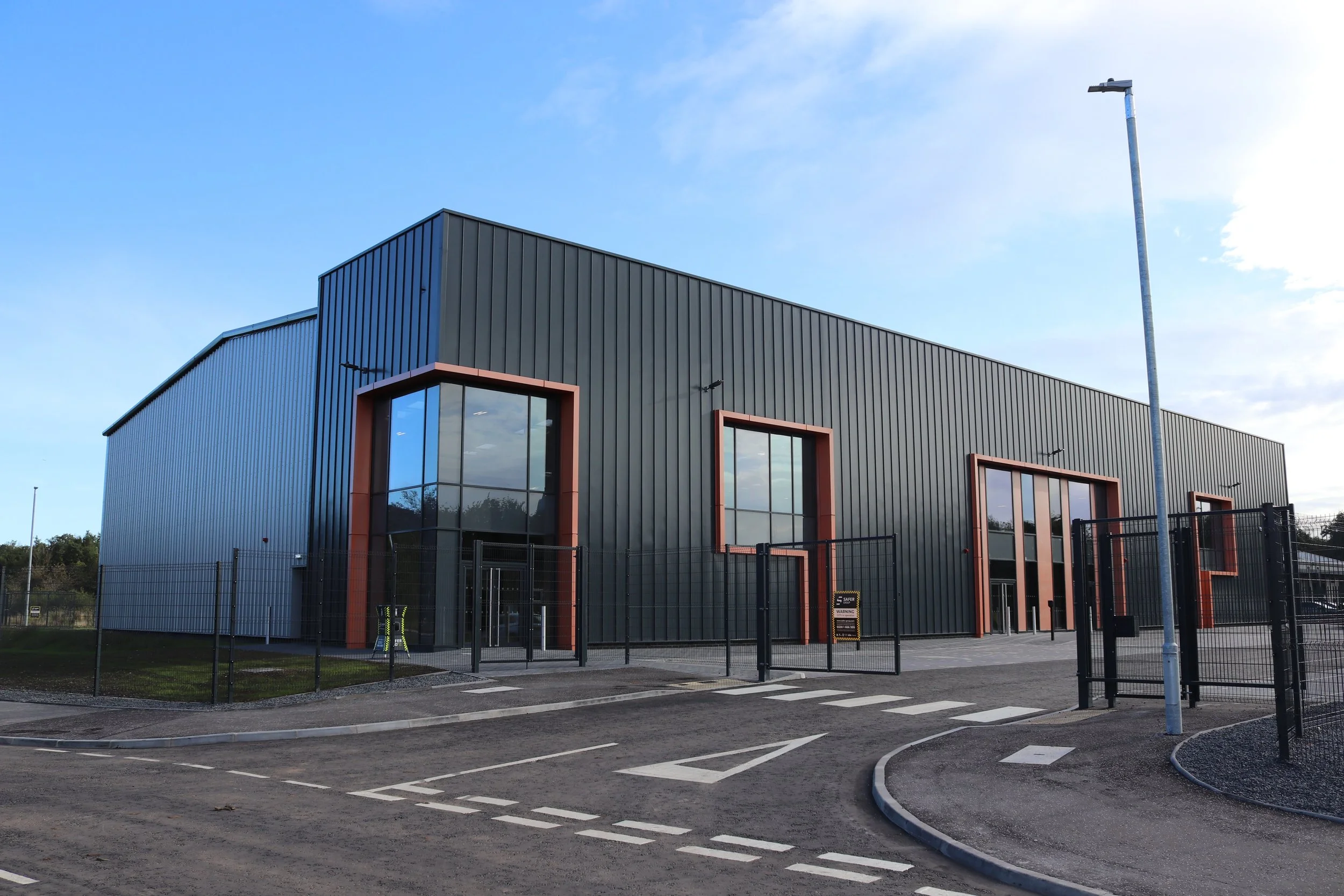
Manufacturing unit for i3 Enterprise
Engineering growth
Manufacturing and industrial facilities are becoming increasingly connected, sustainable and adaptable.
As businesses invest in automation, digital technologies and low-carbon production, the engineering behind these environments is becoming critical to commercial success.
By combining engineering expertise at the earliest stages, with a deep understanding of industrial operations, Clancy helps manufacturers create facilities that perform today and provide the flexibility needed for tomorrow.
For more information on our manufacturing and industrial services, email enquiries@clancy.co.uk.