
Defence, recruitment and growth: the infrastructure driving national prosperity
Article published on 29 June 2026.
The current headlines around defence spending focus on highly important budgets, procurement programmes and military capability.
But there is another conversation we need to have: how can defence investment drive economic growth, create jobs and support regional prosperity?
And equally as important, how can we move away from episodic spending and invest in a long term investment model for operational readiness and resilience? Chris Acton, CEO, discusses in more detail.
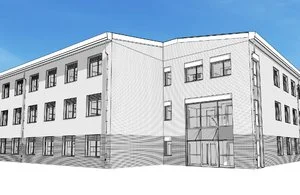
Image credit: Galliford Try/Arcadis. Single Living Accommodation (SLA) at RAF Digby
Our defence infrastructure is a strategic national asset and a powerful economic engine across the UK.
In regions like the North West and East, with its thriving advanced manufacturing, engineering and innovation sectors spearheading growth, investment in defence can embolden supply chains, attract inward capital and support long-term growth.
Gleeds' Building Defence for the Long Term report encourages more investment in defence estates, industrial facilities and supporting supply chains.
It argues by building modern, resilient and adaptable assets, the UK can improve its operational requirements and achieve its economic ambitions.
The challenge for industry, local authorities, developers and consultants like Clancy is to ensure that defence investment has a lasting impact on local communities.
Defence as a catalyst for regional growth
As the UK’s defence sector invests in new technologies, manufacturing capacity and operational capability, opportunities for regional growth will continue to emerge.
Constructing new facilities will create demand for construction, engineering and specialist services – good news for Clancy and our partners.
Expanded manufacturing capacity supports local SMEs and wider supply chains, resulting in job creation.
Meanwhile, investment in research, innovation and skills development can strengthen regional economies and create opportunities beyond the defence sector itself.
For areas with existing engineering and manufacturing expertise, further defence investment can be a catalyst for regional regeneration and growth.
The key to unlocking these benefits requires a long-termist approach, not episodic project spend, from the top down. It is vital to consider how projects will contribute to the local economy, generating employment opportunities and future development ambitions linked to long-term investment.
Infrastructure has a critical role to play in making this happen.
Long-term resilience
For defence infrastructure to serve as a foundation for national prosperity, investment must move beyond reactive, episodic cycles and become more long-term in its thinking.
A continuous, planned approach will ensure that defence estates are resilient against shifting global threats while providing the private sector with the confidence needed to invest in skills and innovation.
By adopting a long-term model, the sector can transition from simply maintaining ageing assets to developing a modern, high-performing estate that is fit for the future, ensuring operational readiness and sustainable economic impact for decades to come.
Designing for adaptability and growth
Uncertainty is one of the biggest challenges facing defence and industrial organisations – which has to navigate evolving technology, shifting production requirements and increasing sustainability expectations.
Given the current geopolitical climate, defence facilities must also be capable of adapting to future demands that may not yet be fully understood.
As a result, defence infrastructure can no longer be designed solely around today's requirements.
Future-ready assets that can evolve over time – with flexible, scalable layouts and provision for future expansion – will help organisations respond to changing operational needs without costly disruption.
At Clancy, we can support this process by looking beyond the immediate brief and helping our defence clients understand how assets will perform over decades rather than years as their organisations and capabilities grow.
Places that support people and productivity
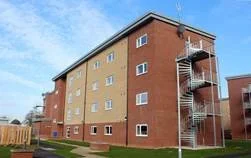
RAF Coningsby, living accommodation
Defence investment is as much about people as infrastructure.
Like any highly skilled sector, attracting and retaining skilled talent remains a significant challenge for the defence industry.
Therefore, any investment in infrastructure must support operational performance – and the needs of the workforce that will occupy those assets.
The independent review of single-living accommodation (SLA) is of particular importance, as a core condition of service.
Around 80,000 single and unaccompanied personnel need high-quality, secure, subsidised housing close to work, mitigating the impacts of an inherently mobile lifestyle and remote military bases. This should be part of any defence planning from day one, not an afterthought.
Modern defence workplaces should also encourage collaboration, enhance wellbeing and productivity, and provide a high-quality, person-led experience.
At the same time, organisations have the same sustainability and ESG targets as any other business and want resilient assets that can meet future challenges head on.
Our specialist consultants at Clancy can help defence organisations to consider these priorities at the earliest project stages, embedding them throughout every aspect of design and delivery to support operational objectives while contributing to positive social and economic outcomes.
Lessons in defence
At RAF Wyton, Clancy provided civil, structural and geotechnical engineering services from Stage 3 through to completion across a combined refurbishment and new-build scheme, supporting both the repurposing of the existing 5,500m² Bennet Pavilion and the delivery of a new 3,500m² Dissemination Building comprising office accommodation, warehouse storage, plant space and associated support facilities.
The project required the integration of multiple engineering disciplines, including the design and coordination of new raised floors, concrete repairs, checks to the existing structure and reviews of loading requirements for proposed new services and walkways. Alongside this, the new single-storey portal frame building incorporated reinforced concrete floor slabs designed to accommodate racking loads, new pumping stations, highways infrastructure and foul and surface water drainage connections into the existing estate network.
The wider infrastructure supporting the completed assets was equally important. Careful consideration of utilities, below-ground drainage modifications, external landscaping, highways, external works and future operational requirements helped to ensure the facilities are properly integrated into the wider RAF estate and will continue to perform effectively throughout their lifecycle.
The project demonstrates the value of our coordinated engineering expertise in delivering defence infrastructure that supports immediate operational needs and long-term resilience. We’re also involved in the wider RAF estate working on various schemes across the UK.
Supporting defence manufacturing
Clancy supports defence manufacturers in expanding production capacity and office space to meet future demand. Our work includes introducing automation to improve space efficiency and enhancing workplace environments for staff.
Keeping production running during infrastructure upgrades is equally critical. So, Clancy’s civil and structural engineering teams specialise in live operational manufacturing facilities on brownfield sites across the UK.
This helps manufacturers future-proof their assets, minimise disruption and reduce the risks associated with complex infrastructure projects.
Collaboration will define success
Local authorities, developers, defence organisations, consultants, contractors and supply chain partners all have a role to play in bringing to life defence projects that inject growth into regional economies.
Successful projects depend on early engagement between these stakeholders to ensure investment aligns with wider economic development objectives, infrastructure requirements and long-term placemaking ambitions.
Engineering consultants like ourselves can act as technical advisers and partners that develop integrated solutions to deliver lasting value – especially in regions where defence facilities sit alongside wider commercial and residential regeneration.
By taking a holistic, joined-up approach to defence investment, we can ensure the UK meets its ever-changing operational requirements and achieves regional prosperity.
Contact us at enquiries@clancy.co.uk for more information about our defence capability.