
The road to timber: driving sustainable construction in the UK
Article written on: 26 February 2026
The UK Government published an update to its Timber in Construction Roadmap in March 2025 to position timber as a mature, high-performance material that should be embraced in the construction of homes and commercial buildings.
However, the policy acknowledges that data gaps still hold back wider adoption – particularly around whole-life carbon and the use of UK-grown timber. In short, reliable, comparable data on home-grown timber can be difficult to obtain, and the Government has highlighted that over-specification by non-specialist engineers continues to limit its uptake.
Here, Wendy Thomson, Associate, and a member of the Structural Timber Association (STA), takes stock of the Roadmap almost a year since its update, looks at ways to improve adoption, and shines a light on her experience of highly successful timber use.
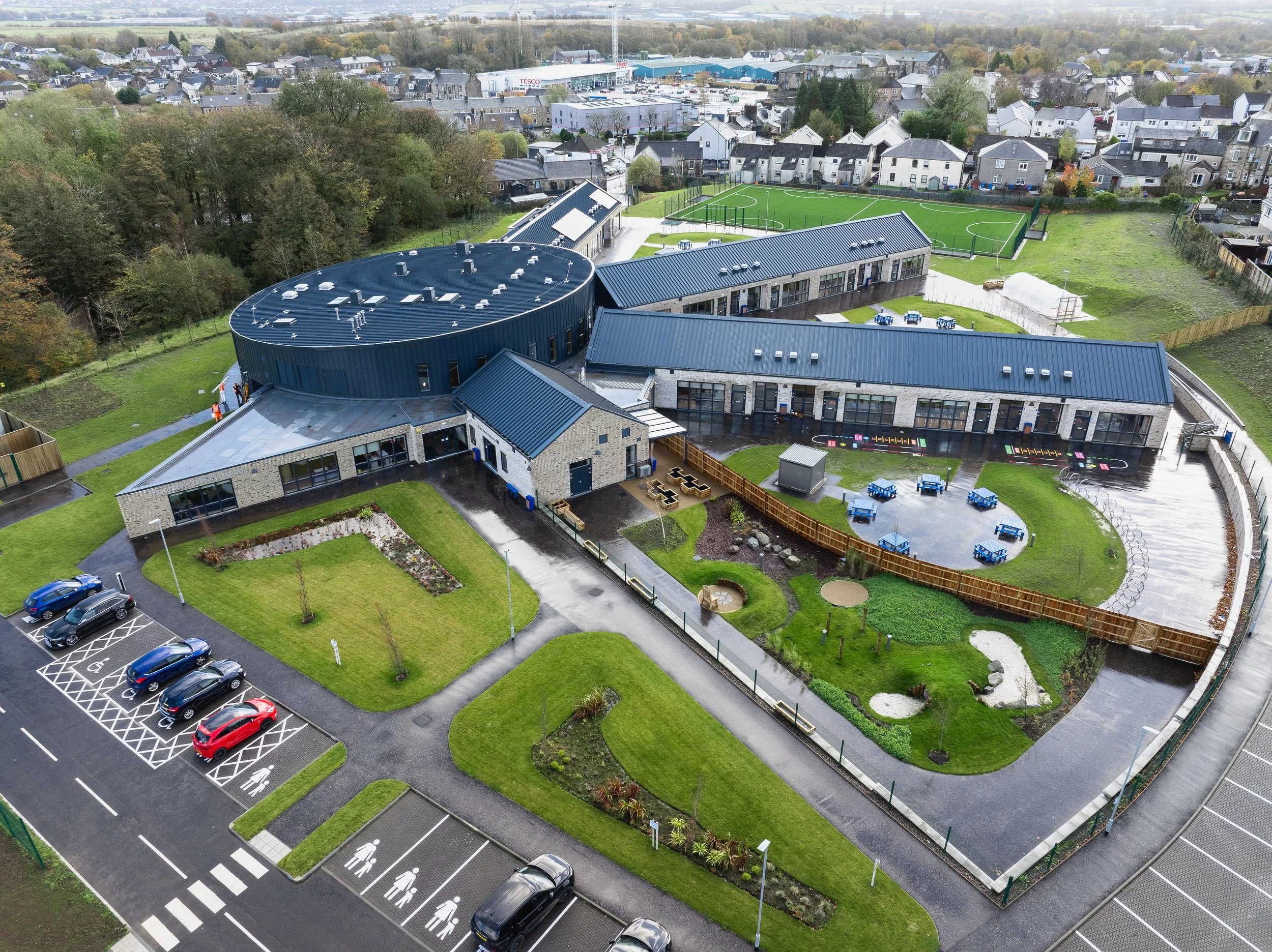
Moorpark Primary School - constructed with timber
The Timber in Construction Roadmap emphasises that improving carbon data, life cycle assessment and supply-chain transparency is taking us in the right direction when it comes to timber construction.
However, the plan also highlights that the delivery of more timber projects will depend on education and confidence-building across the entire design and specification community – something at Clancy we have championed for many years.
With imports still nudging embodied carbon and cost upwards, the case for home-grown timber is particularly strong. That said, the sector still faces broader industry misconceptions around quality, grading, and safety.
On safety and confidence, the roadmap reflects progress already being made by the sector, particularly through the work of the STA in engaging insurers and promoting robust site and fire safety strategies. Any fire risk is most acute during construction, but when properly designed, detailed and managed, we know that timber buildings can perform on a par with other materials.
Pattern books, tested details and clearer guidance, alongside initiatives such as a proposed mass timber insurance playbook, are all critical tools in reassuring insurers, lenders and warranty providers.
Collaboration is key
To ensure that timber is considered a viable material when it comes to constructing new buildings across the UK, it’s vital to continue collaboration between academia and industry, while freeing up more funding for new training and apprenticeships. Without it, innovation risks outpacing adoption, regardless of technical merit.
After all, skills, supply and innovation underpin the roadmap’s long-term ambition. Though the prevalence of timber frame building in Scotland has somewhat contributed to a decline in specialist timber degree courses, the overall industry response is encouraging - which should be good news for the rest of the UK.
We now have refreshed STA installer and designer training schemes, new apprenticeships launching in 2026, and funding support from the NHBC and CITB – all positive steps towards a timber revolution.
However, it’s often still the case that non-specialist engineers specify higher-grade imported timber, unnecessarily increasing cost and embodied carbon. An educational effort is needed, backed by trusted, peer-reviewed research, to highlight the quality of UK timber and dispel misconceptions about rapid tree growth affecting its performance.
Championing the wealth of insights, research and innovation within our sector – particularly in industrialised and offsite timber solutions – is key to this. So, it’s great to see this already being driven from the front by organisations such as Built Environment - Smarter Transformation, Scotland’s national innovation centre for construction and the built environment, and academic institutions like Edinburgh Napier University.
Combined with leaps towards more advanced timber manufacturing, increased automation and precision – as seen in panelised and mass timber production – innovation is clearly already well underway.
But, ultimately, the roadmap’s challenge is less about invention, and more about scaling what works: aligning skills, supply, insurance and perception to allow timber to fulfil its low-carbon potential at pace.
Timber in focus: Moorpark Primary School
Moorpark Primary School in Kilbirnie, North Ayrshire, is a modern, purpose-built education facility that places sustainable timber construction at the heart of its design.
Delivered through the Hub South West Scotland Framework, as part of North Ayrshire Council’s Capital Investment Programme, the project replaced the town’s former primary school, which could no longer meet the needs of a growing community.
Located adjacent to the original site, the new school accommodates 12 primary classrooms and a 16-place early years provision, alongside a large hall, breakout spaces and an all-weather pitch. The building also incorporates a natural ventilation strategy to deliver fresh air year-round, solar PV panels to generate renewable electricity, and enhanced pedestrian and cycle routes, including new cycle and scooter storage.
Constructed by Clark Contracts, sustainability was a key driver in the choice of a structural timber system. The contractor appointed Clancy to provide structural engineering services, working closely with Robertson Timber Engineering to finalise the timber frame kit design.
Early plans specified cross-laminated timber (CLT), but this was later ruled out on cost grounds. We collaborated with the local authority and timber specialist to value-engineer the scheme, arriving at a traditional open-panel timber frame solution that preserved environmental performance while reducing capital cost. The approach also delivered programme benefits, cutting the construction schedule from 22 weeks to 16 weeks and reducing embodied carbon.
A standout architectural feature is the circular drum at the heart of the school. Rather than using curved elements, we developed a faceted solution formed from standardised timber panels, enabling efficient off-site manufacture and rapid on-site assembly. The drum roof is supported by 840mm-deep glulam beams, while increased stud depths were used to accommodate the structure’s height.
Another challenge was the inclusion of a large first-floor water tank within the timber structure. We designed a bespoke steel support frame to safely integrate this non-standard load without compromising the timber system.
The project demonstrates how collaborative, engineering-led design can unlock the full potential of timber. By combining low-carbon timber, efficient construction and renewable technologies, Moorpark Primary School provides a robust template for future sustainable buildings across the UK, not just Scotland.
In this, its achievement directly supports the ambitions outlined in the UK's Timber Roadmap – offering a tangible lesson for the industry.
Learn more about our specialist timber engineer services or contact Wendy Thomson, Associate Structural Engineer wendy.thomson@clancy.co.uk to discuss your next timber project.